
Our pet cat Toby became critically ill. With a deep gash on his neck and a severe bladder disorder which followed, we were in and out of hospitals with Toby who was sewn up multiple times. Toby’s survival itself was a miracle. He was virtually resurrected. Once he returned home, to prevent Toby from escaping and aggravating his delicate condition, we had to become prisoners in our own home along with him. Every possible exit was heavily bolted and each time one of us left the house, another had to guard the door. The house didn’t know what sunshine was despite the scorching heat outside. Our sitting room, and every other open space which Toby could access was turned upside down: cushions were stuffed elsewhere, dining table chairs were moved to another room, the comfy sofa in our tv lounge was covered with a dust cloth; all to prevent Toby from soiling the surfaces in his sick state.
KonMari Method
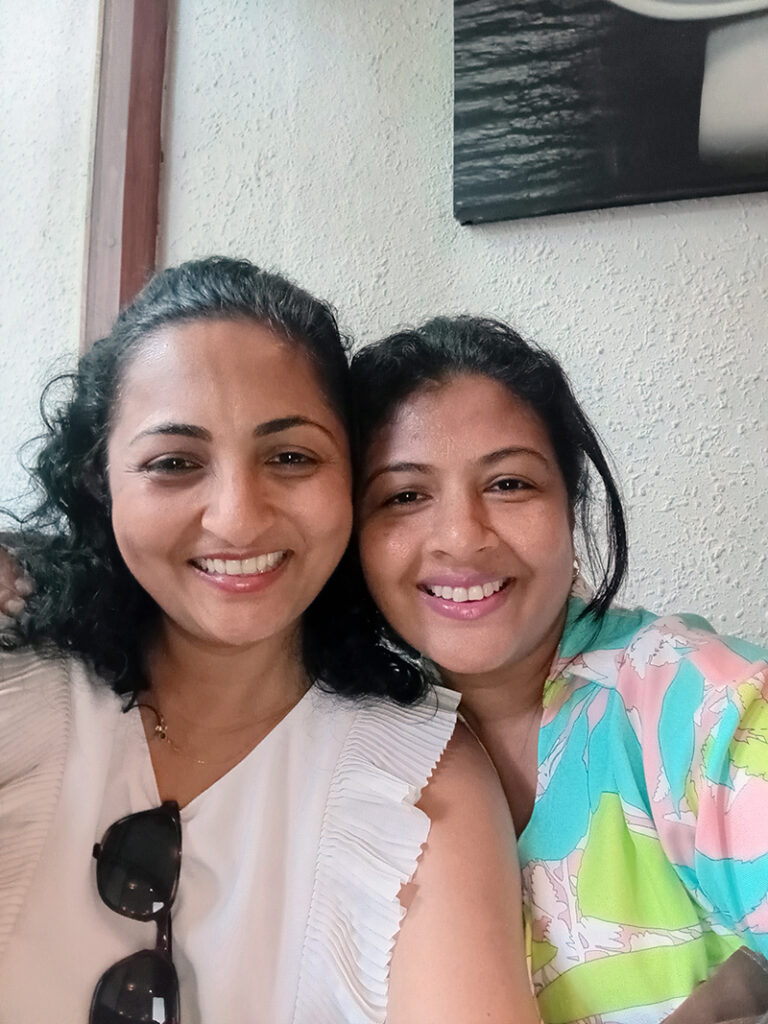
My cousin Uthpala (L) and me, a bond like none other
With days passing, I was becoming disoriented, my mind was gradually freezing seeing my loved corners and belongings looking all miserable and alien. I was on a breaking point keeping vigil on Toby and my spaces losing its lustre with cluttered belongings piled up. The worst was the spaces being deprived of sunlight- me being a strong believer of the wonders of sunshine. In this midst of this chaos, impulsively I was driven to read about Feng shui, the ancient Chinese practice of arranging spaces and objects to create balance and enabling positive flow of energy. It was a fascinating journey of discovery. I took online quizzes, received reports on where to improve the balance and even earmarked some books on the subject for further reading. Eager to share my findings with my cousin sister Uthpala in Canada, my lifelong companion in unearthing new facets in life, I picked up the phone and the conversation which followed put me on a voyage in life. She introduced me to Marie Kondo and her ‘KonMari’ method of decluttering which complemented my Feng shui enthusiasm.
An addictive read
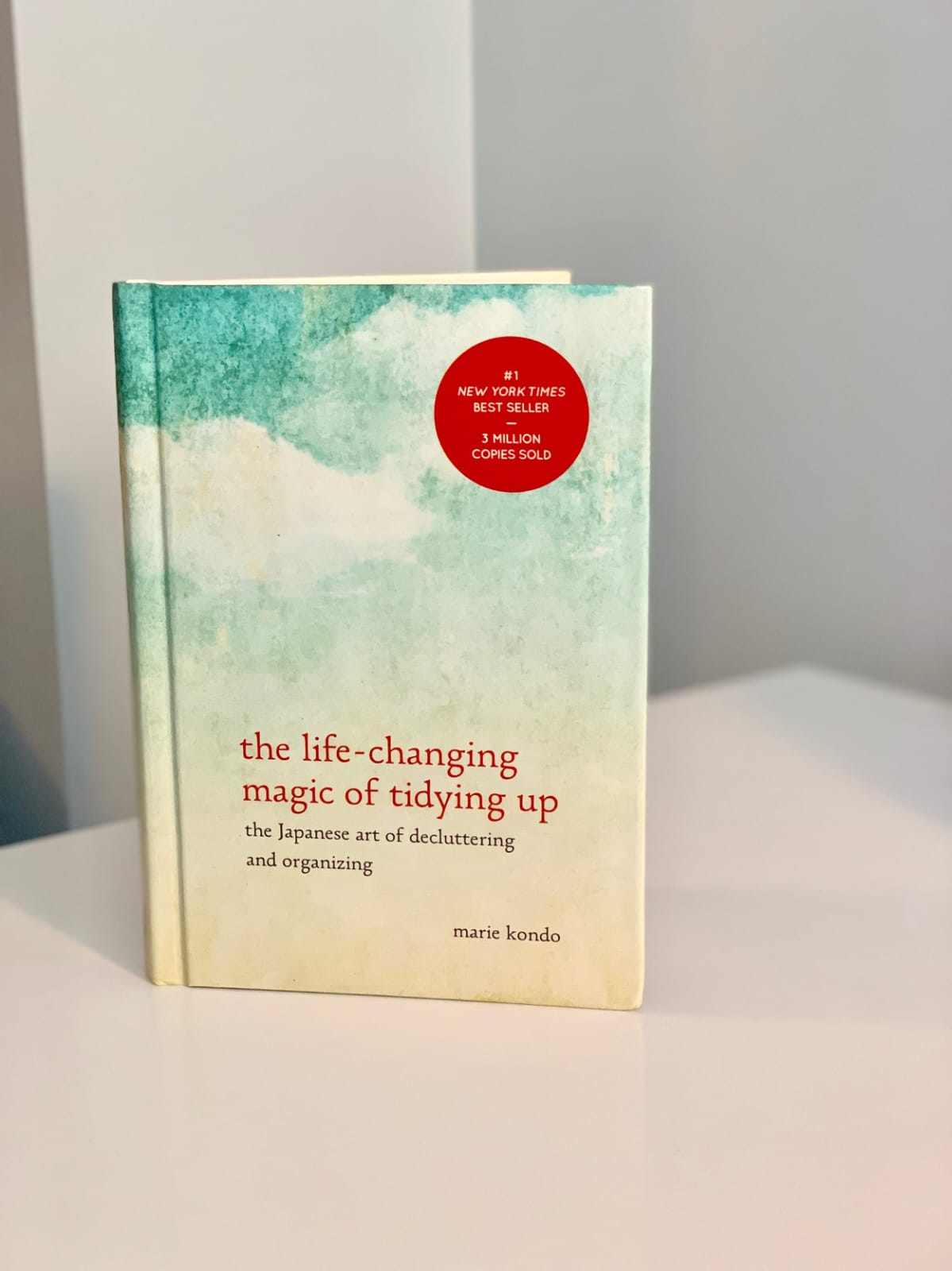
I was intrigued to read her globally acclaimed book ‘The life-changing magic of tidying up’- The Japanese art of decluttering and organizing. Failing to find a copy in local book stores, I searched online and to my delight I stumbled upon an e-copy which I virtually ‘devoured’. I wasn’t amazed at all that this wonder of a book had sold nine million copies world over. It was addictive and I read it in one breath consuming half a Sunday.
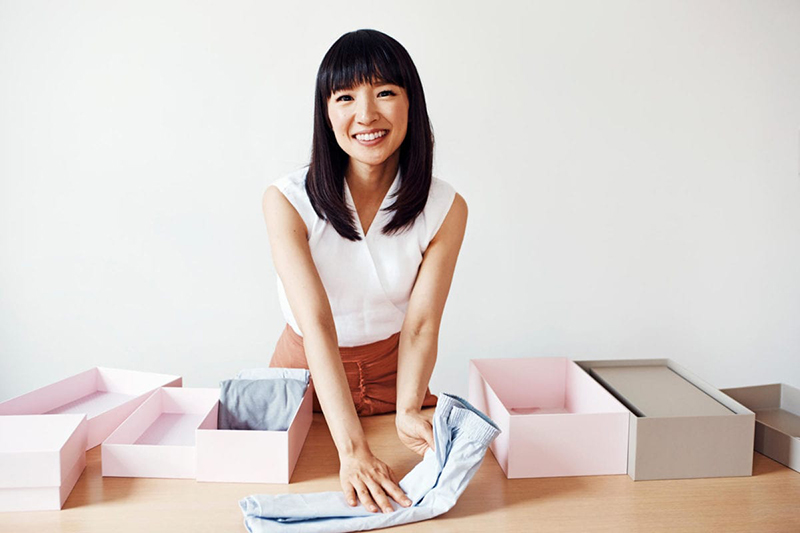
Marie Kondo, architect of KonMari Method of tidying and decluttering
I have always been a tidying enthusiast, one reason why I could so well relate to Marie Kondo. But what I realized after reading Kondo, as many of her other readers have endorsed is that most of us have been ‘organized collectors’. What distinguishes us the ‘organized collectors’ to untidy ones is that the cluttering nature of the latter is so obvious to anyone. Yet in our case the ‘organized collectors’ we are so pristinely neat to the naked eye, nothing spills out, nothing looks out of place, but unconsciously filling our shelves, drawers, cabinets over the years, sometimes forgetting we have duplicated certain objects.
Resetting your life
“You won’t die of your house isn’t tidy, and there are many people in the world who really don’t care if they can’t put their house in order. Such people, however, would never pick up this book. You, on the other hand have been led by fate to read it, and that means you probably have a strong desire to change your current situation, to reset your life, to improve your lifestyle, to gain happiness, to shine,” writes Marie Kondo pulling the strings of your heart. Her formula for decluttering is simple: if any object doesn’t spark joy in you, you can get rid of it. And this formula works. You realize once you’ve tossed them away that you don’t really miss them.
Things that spark joy
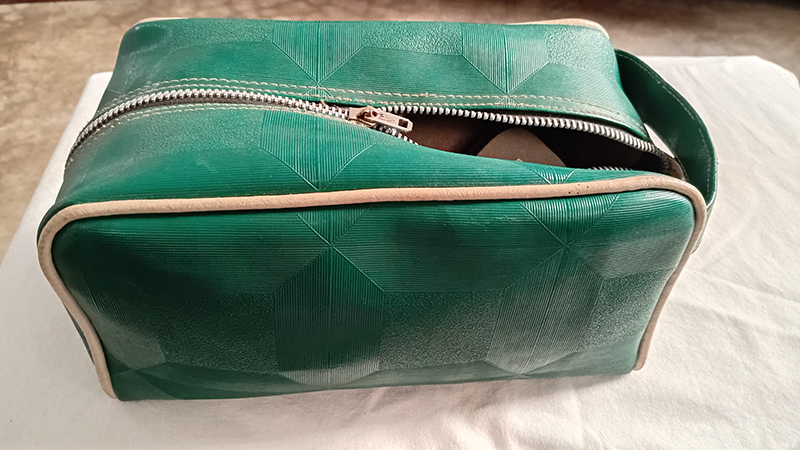
Atha’s green case
Marie is again correct when she says to leave very personal objects such as photos and other heirlooms of nostalgia to deal with last and if they still spark joy in you, you have all the right to retain them. In my decluttering process, I myself experienced this so very well…the little teddy bear for instance which my grandfather (atha) brought me from his travels to England long years back lifted my heart and filled me with joy and I retrieved it from my book cupboard and placed it on my desk. Atha’s bottle green case which I loved as a child for some odd reason and which I later came to possession still serves me as my repository of old recorders which I used for my journalistic pursuits. Despite being surrounded by so many newer cases, this ‘green case’ still occupies a very nostalgic corner of my heart…
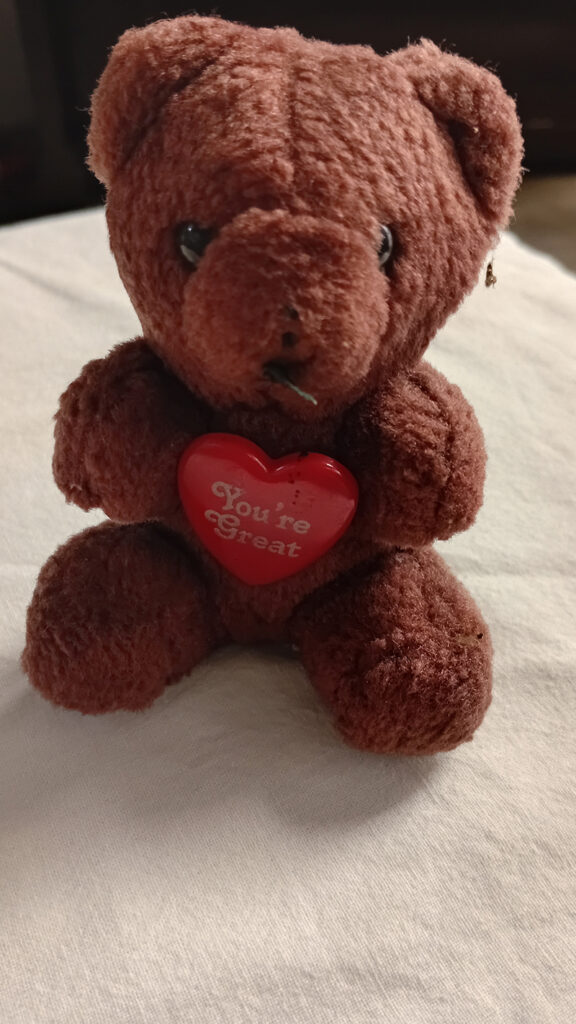
Little teddy bear 40 years old now
My own ‘Value Village’
Applying KonMari method and saying a silent prayer of thank you to my sister Uthpala, I ‘declared war’ against all the objects forgotten or gathering dust starting from one corner of the house. Despite giving away something to someone every month from clothes to a kitchen utensil, I was stupefied at how much still remains to go! Our back verendah became a temporary storage with cardboard boxes piling up every day for more than two weeks.
With avurudu just around the corner, I couldn’t have chosen a better time for this mission. I created my own ‘Value Village’ with electronics, appliances, books, clothes and so much in between. There were enough and more in my ‘support eco-system’ to happily receive them. It was a win-win: I was thrilled to see them find a fitting home and they were delighted to find them of either utility or decorative value. I even gave away half of my plants in the backyard along with the pots keeping with me only the lush, tall foliage, or rather the ones that spark joy in me each time I see them.
Life-changing magic
KonMari method was becoming addictive, so much so, I gave away racks, chests of drawers, linen etc. feeling lighter and lighter each time a pile was sent out. It was like lifting a veil of cloudiness that shrouded your vision and seeing your own things with clarity and with consciousness. I found it therapeutic and liberating. As Marie Kondo assures, it is indeed a ‘life-changing magic.’ I’ve joined hands with my cuz Uthpala in being able to conquer ourselves in a certain way- to be able to look at all things nice in a shop yet not get carried away, to get only what we actually came for and put aside the other ‘nice to have things but not necessary, to be able to ask ourselves: ‘do I really need it?’
Marie Kondo’s book became my living testimony to Lord Buddha’s wisdom thousands of years ago: ‘nobody becomes poor by giving’. In fact, we become richer in our perspectives in many ways.